

01
Not forced compliance
A teen or adult can say no, ask for a break, or withdraw assent. We pause, listen, and adjust rather than pushing through distress.
Individualized, assent-based ABA for autistic teens and young adults ages 13–25 across the East Bay. We build communication, self-advocacy, daily living, planning, and community skills around the person’s own goals.

Practical support for real life, guided by the person receiving care.
The teen and young-adult years bring new responsibilities, choices, and transitions. A BCBA starts by listening: what feels difficult, what matters now, and what greater independence would look like to the person—not just to the adults around them.
Goals are practiced in the places they matter, often at home and in the community, with assent, dignity, and age-respectful support built into every step.

There is no standard teen or transition-age program. Goals are chosen around the person’s priorities, support needs, authorization, and daily life.
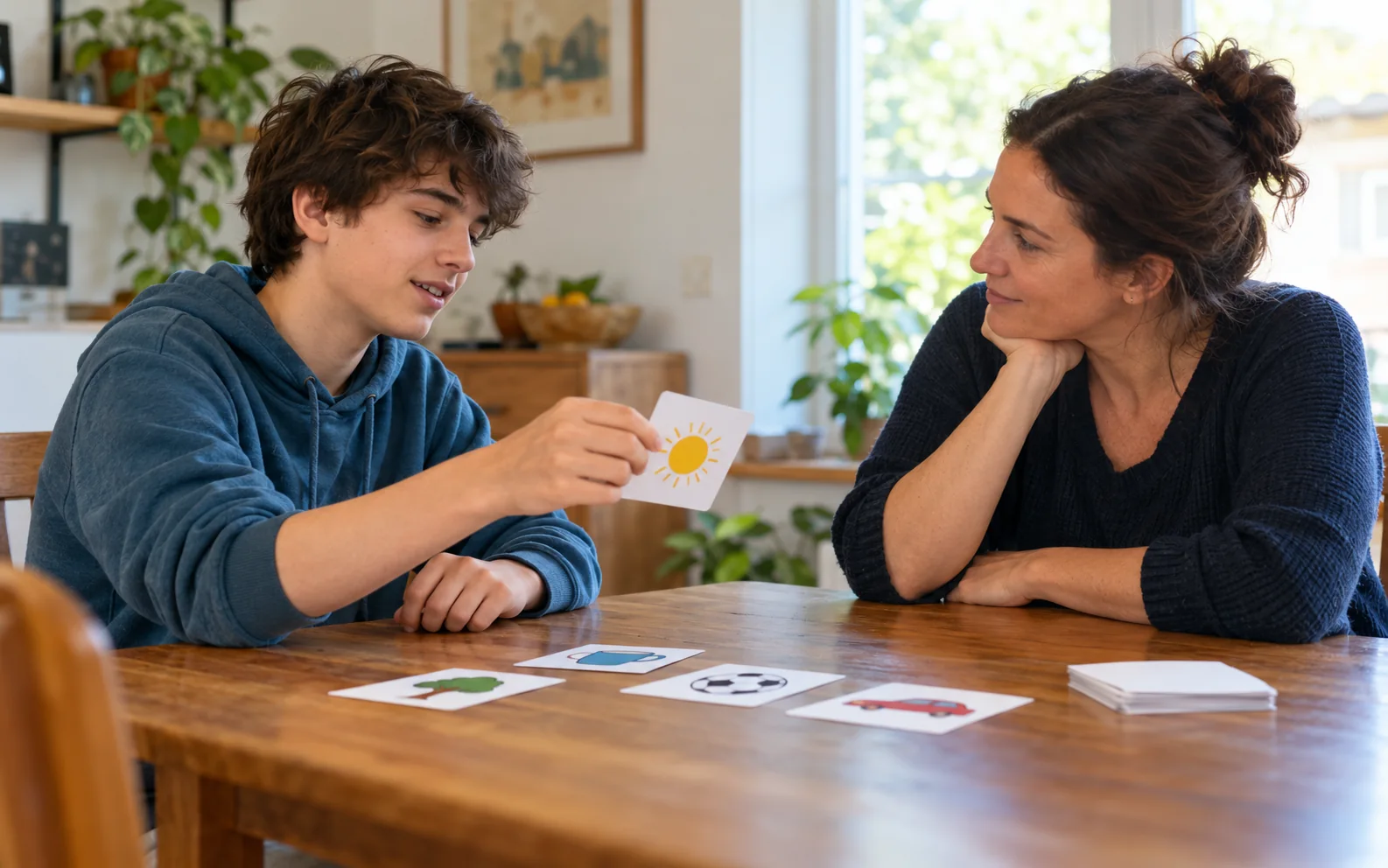
Expressing preferences, asking for help, setting boundaries, using speech or AAC, and taking a more active role in decisions.

Preparing meals, organizing routines, managing personal tasks, and breaking larger responsibilities into workable steps.

Practicing transportation, shopping, appointments, shared interests, friendships, and participation in chosen community activities.
These are examples, not a checklist or promised outcomes. The person receiving services helps choose goals and who they want involved.
Supporting images are representative stock or AI-generated scenes, not photographs of Animate Behavior clients, staff, or facilities.
Older clients deserve age-respectful care that treats assent, autonomy, and quality of life as clinical requirements—not optional extras.
A teen or adult can say no, ask for a break, or withdraw assent. We pause, listen, and adjust rather than pushing through distress.
Goals are not assigned because of age alone. Each plan is built after assessment around the person’s priorities, strengths, and actual support needs.
We do not suppress harmless stimming, force eye contact, or target traits simply to make someone easier for others to manage.
The people making clinical decisions know the person, the goals, and what is happening week to week.
The BCBA meets with the person and their support team, identifies meaningful priorities, and explains the purpose of every recommended goal.
A consistent RBT practices agreed goals in home and community routines, with close and ongoing BCBA supervision.
Parents, caregivers, and other chosen support people can learn strategies that help skills carry over without taking over the person’s voice.
Examples to discuss with the BCBA—not requirements everyone must complete.
Expressing needs, preferences, boundaries, and decisions through speech, AAC, signs, or other reliable communication.
Cooking, laundry, hygiene, household routines, and personal tasks, taught at a pace that preserves dignity and choice.
Using schedules, checklists, reminders, and step-by-step systems to manage responsibilities with less support.
Practicing transportation, shopping, appointments, safety, and activities the person wants to access.
Building communication and confidence for friendships, family relationships, and chosen social activities.
Understanding what behavior communicates and building safer, more effective ways to navigate stress, change, and difficult situations.
For teens and young adults, services are generally home- and community-based across the East Bay, depending on clinical need, authorization, staffing, and availability.
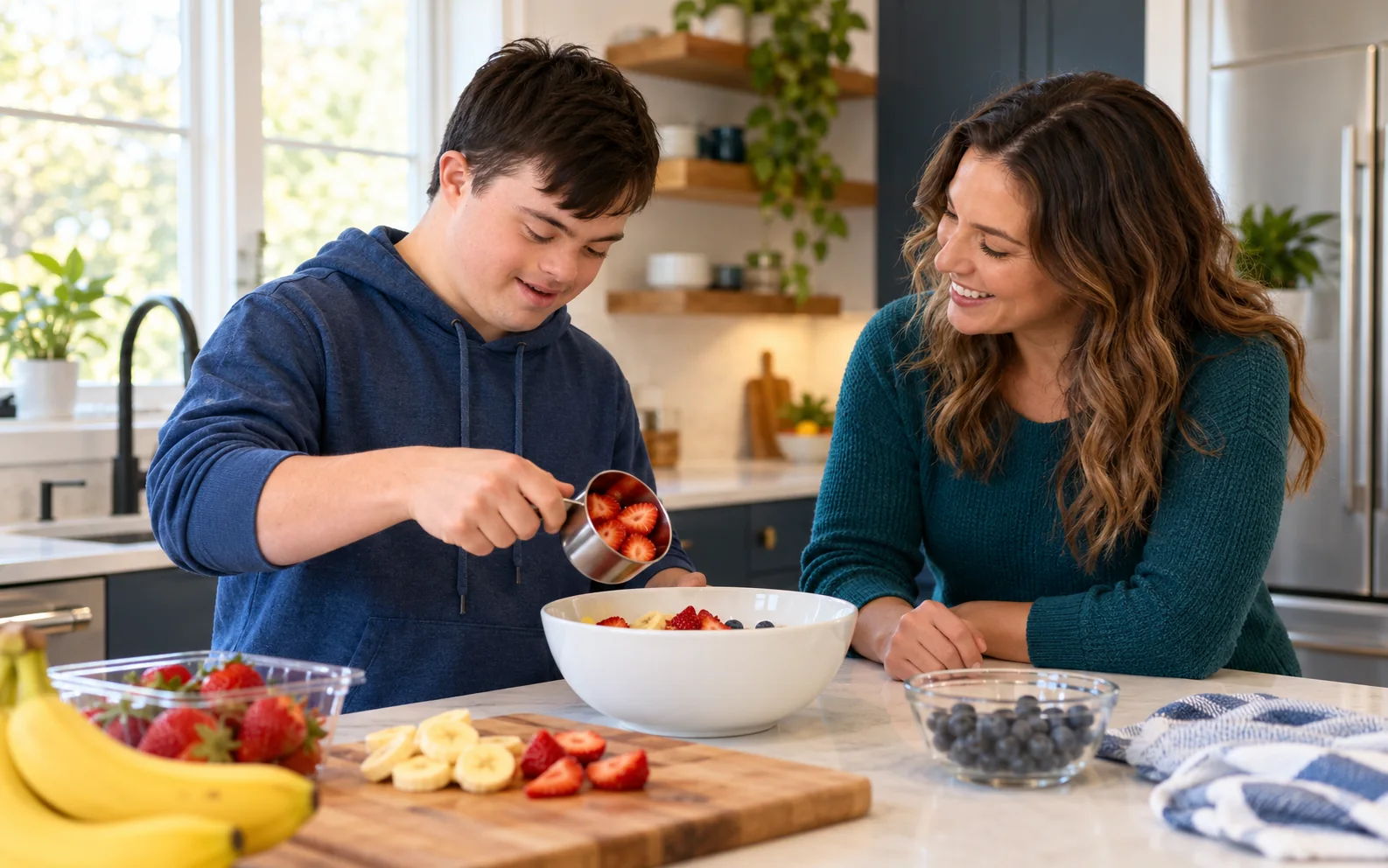
Work on meals, routines, organization, communication, and other chosen goals in the environment where they happen.

When approved and clinically appropriate, practice skills in real settings such as stores, transit, appointments, recreation, or other chosen activities.
We currently accept Kaiser Permanente and Contra Costa Health Plan, and we work with the Regional Center of the East Bay (RCEB). Eligibility and authorization depend on the person’s plan, funding pathway, diagnosis, and medical necessity—not simply age.
We’ll help check your coverage or Regional Center funding as part of your request. Prefer to talk first? Call us weekdays, 9 AM to 6 PM Pacific: (510) 500-5124
Tell us what the person wants more support with, what is already working, and who they want involved. Our client services team replies within one business day, and a clinician reviews every request.